

Accelerating AI Integration Across Enterprise Marketing Teams
Wripple partnered with Spark Novus to deliver an enterprise marketing workshop focused on practical AI integration and operational maturity, helping teams translate emerging AI shifts into structured priorities.
Wripple: A Modern Talent Platform Powering Enterprise Marketing Agility
Wripple is a marketing talent platform built for enterprise brands operating in complex, fast moving environments. By connecting organizations with vetted, on demand marketing and creative professionals across strategy, media, operations, analytics, and content, Wripple enables teams to scale expertise quickly while maintaining quality and accountability.
Designed for enterprise marketing organizations, Wripple supports flexible operating models that adapt to shifting priorities without increasing fixed overhead. Its curated talent network helps brands accelerate initiatives, access specialized capability, and strengthen execution across critical programs.
As AI reshapes marketing workflows and operating structures, Wripple helps organizations align the right expertise alongside emerging AI capabilities, enabling enterprise teams to evolve how work gets done in an AI driven landscape.

The Situation
Wripple supports enterprise brands by connecting them with vetted, on-demand marketing and creative professionals across strategy, media, operations and execution.
As AI became embedded across content creation, media optimization, analytics and workflow automation, Wripple saw the shift across the organizations it serves. AI was no longer experimental. It was actively changing how marketing work was produced, reviewed, optimized and scaled.
Enterprise teams were adopting AI tools, introducing AI-assisted workflows and expanding automation across their martech environments. At the same time, leaders were confronting broader questions about role evolution, governance, operating structure and execution standards in an AI-driven environment.
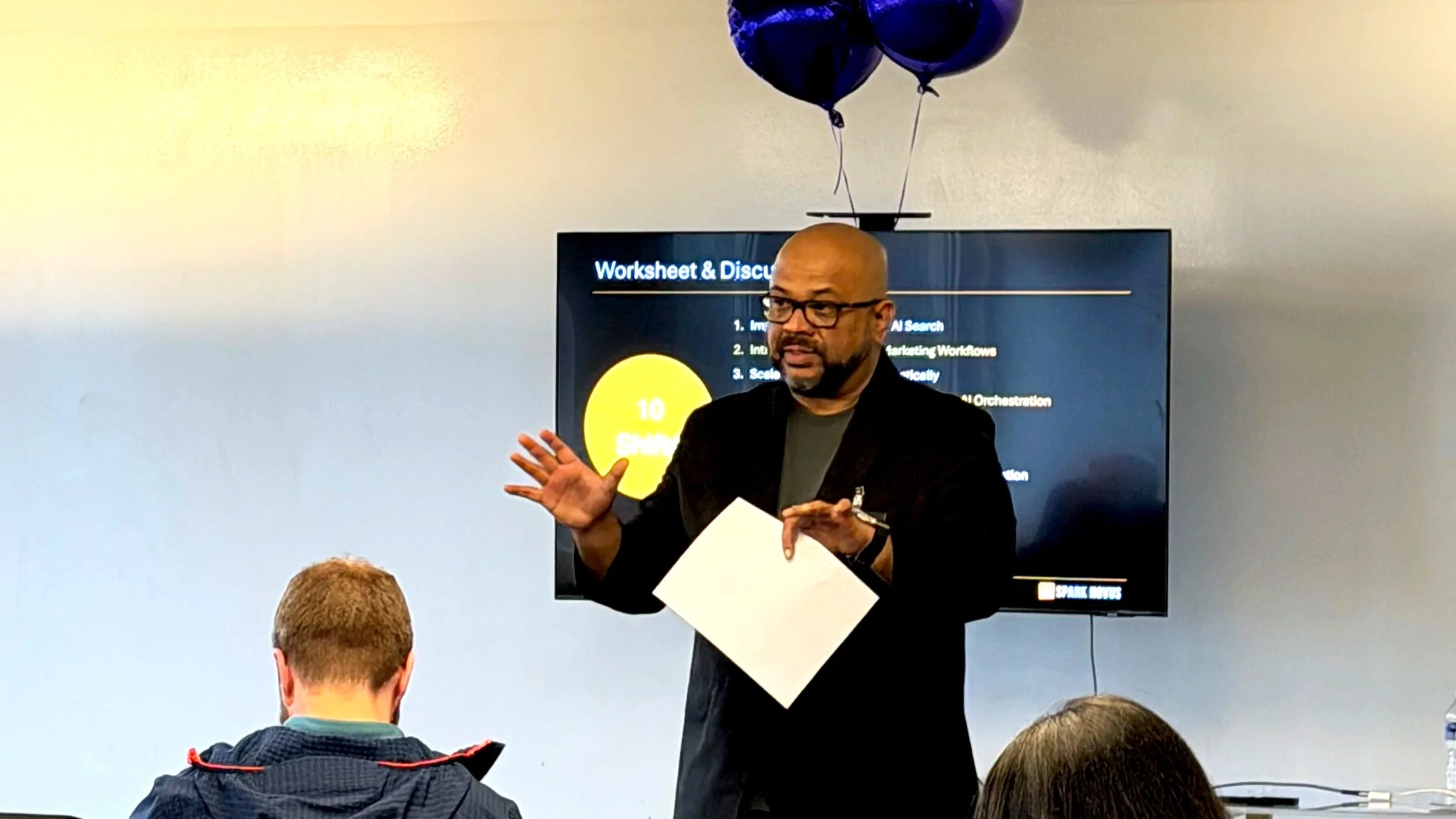
As AI began influencing roles, workflows and performance expectations, Wripple convened senior marketing leaders and engaged Spark Novus to design and lead the workshop content, driving alignment around practical integration, operating model evolution and clearly defined AI priorities that enterprise marketing teams could implement immediately.
NOTE: Spark Novus is an official Wripple Agency Partner
The Work
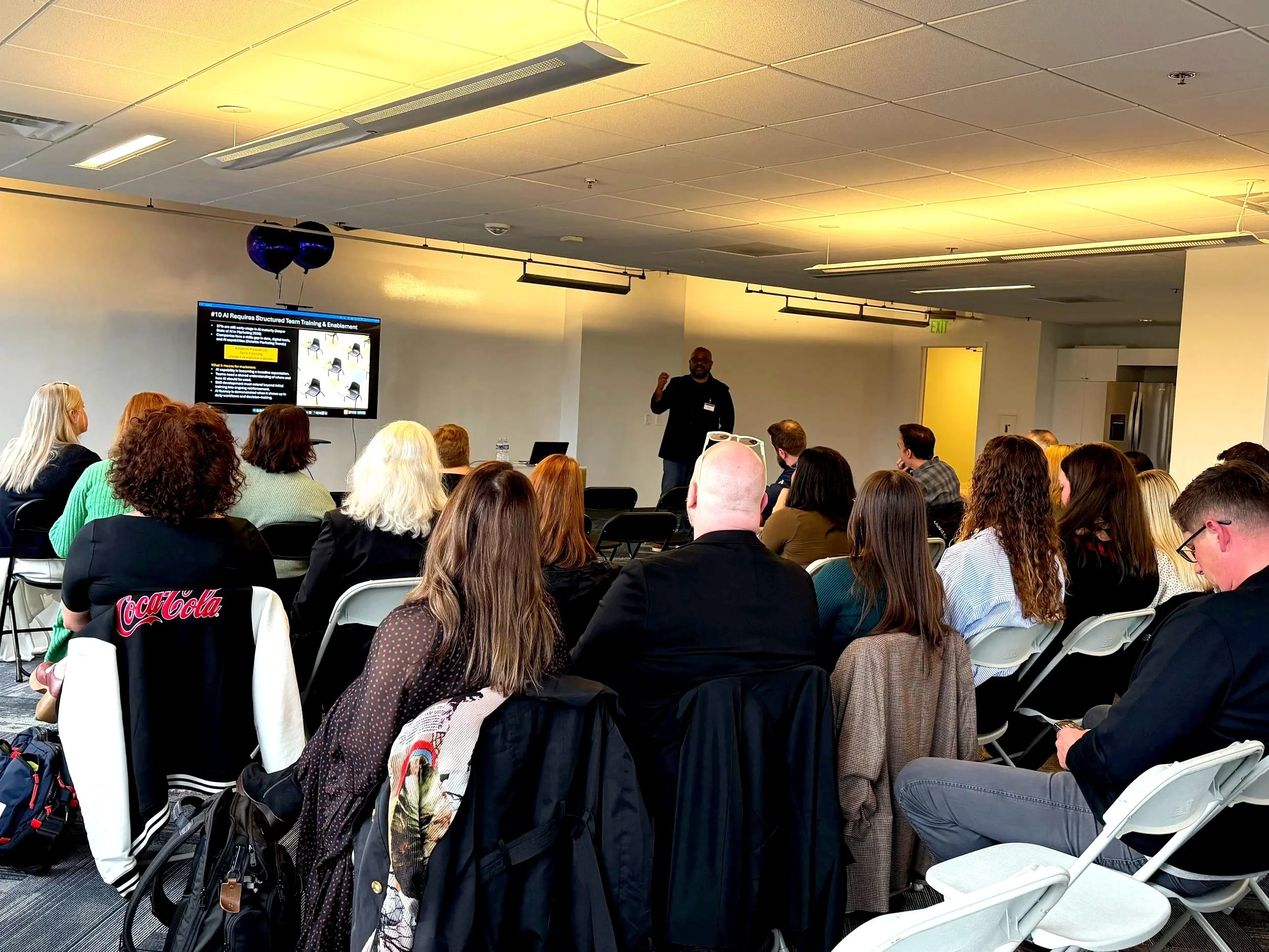
Spark Novus designed the workshop in coordination with Wripple to ensure the session reflected the realities of enterprise marketing teams navigating AI integration at scale. The session structure was defined in advance to create clarity, focus and disciplined delivery.
The work centered on the following elements:
Spark Novus aligned with Wripple on the objectives of the session, grounding the content in enterprise marketing priorities, AI adoption trends and the operational pressures facing large marketing organizations.
A structured framework of 10 AI shifts reshaping marketing was introduced, translating broad AI momentum into practical implications across content, media, analytics, martech and team structure.
AI was positioned as an operating layer influencing workflow design, role definition and execution standards, reinforcing that advantage comes from disciplined integration rather than isolated experimentation.
Clear distinctions were drawn between adoption and operational maturity, emphasizing that enterprise value emerges when AI is embedded into daily workflows and supported by structured enablement.
Live engagement through Slido enabled real-time reflection and surfaced shared signals across participating organizations.
The session closed with a guided prioritization worksheet, prompting leaders to identify the top AI shifts their teams should focus on and outline concrete next steps. This ensured the conversation moved from insight to action, leaving participants with structured clarity rather than abstract inspiration.

The OUTCOMES
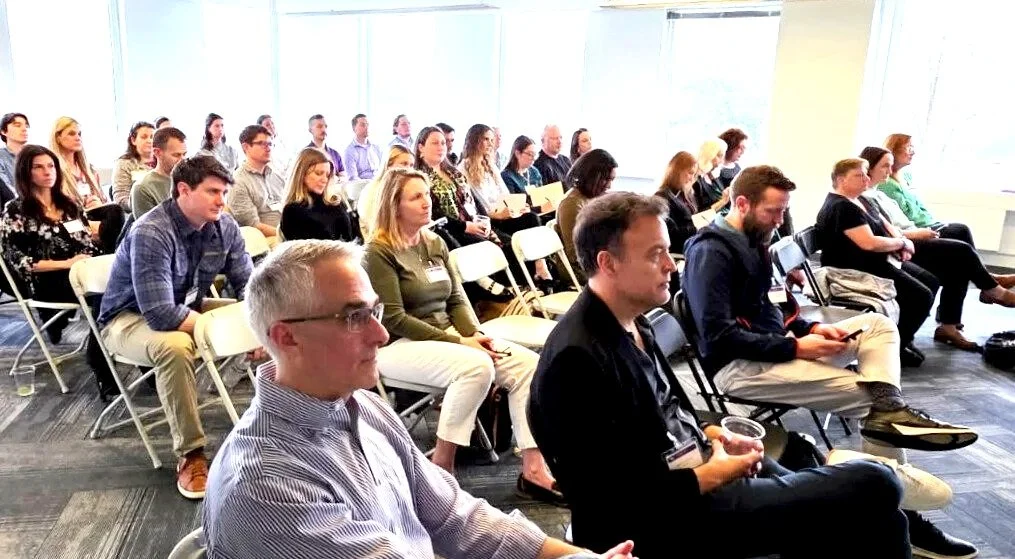
The workshop convened senior marketing leaders representing Inspire Brands, Delta Air Lines, Georgia-Pacific, The Coca-Cola Company, SVB FCB, Southern Company, Children’s Healthcare of Atlanta, Mohawk Industries, Ronald McDonald House Charities, LHH, Floor & Decor, NCR Voyix, Arthritis Foundation and IHG Hotels & Resorts.
The cross-industry mix created a high-caliber exchange around how AI is reshaping enterprise marketing execution.
Leaders engaged deeply in the guided worksheet exercise, surfacing the top five AI priorities across participating organizations:
Strengthening AI skills across marketing teams
Introducing AI agents into marketing workflows
Scaling content more systematically
Modernizing marketing analytics
Accelerating creative and video execution with AI
The alignment around these priorities reinforced a shared commitment to integrating AI in a disciplined, practical way inside modern marketing organizations.

Ray Samuels
Co-founder
Wripple
“Everyone was over the moon with the event. Spark Novus delivered a focused, well-structured workshop that clearly resonated with our audience. The conversation around AI integration and enterprise marketing priorities struck exactly the right balance of strategy and practicality.”
Explore an AI Workshop for Your Team
Spark Novus partners with leadership teams to design interactive AI workshops that cut through noise, clarify priorities and ensure adoption strengthens execution rather than distracts from it. The result is aligned leadership, faster decision velocity and disciplined AI integration tied directly to business performance.
If this resonates, it may be time to explore an AI workshop for your team.
-
An AI workshop for enterprise marketing teams is a structured, interactive session designed to align marketing leaders around AI integration, operating model evolution and practical execution priorities. The focus is on translating AI into real workflows across content, media, analytics and campaign operations.
-
The workshop reinforced that AI must be anchored to strategic priorities before tools are introduced. Teams began with business objectives and marketing performance goals, then identified AI use cases that supported those outcomes. Strategy led. Tools followed.
-
Fragmentation is reduced when leadership aligns on a small set of defined priorities, assigns ownership and integrates AI into existing workflows. Instead of isolated pilots, AI becomes embedded across content, media, analytics and marketing operations with clear expectations and accountability.
-
Governance defines the rules, responsibilities, oversight and boundaries for how AI is used in marketing. It should include clear approval processes, defined use case boundaries, input controls, human review standards and alignment with brand and compliance requirements. Good governance protects brand trust, gives teams clarity on what is allowed, and enables confident, consistent AI use across marketing workflows.
-
Enablement should be role-based and workflow-specific. Training tied directly to day-to-day marketing activities increases adoption and consistency. Reinforcement mechanisms ensure AI becomes part of how teams operate, not a one-time initiative.
-
Leaders should expect clearly defined priorities, cross-functional alignment, structured next steps and assigned ownership. The objective is disciplined AI integration tied directly to strategic performance outcomes.