
Why governed orchestration, not more tools, is the next move for CMOs and CIOs
By guest contributor: Sumit Bhagchandani is the creator of 3 Lines of MarTech. He is a valued member of the Marketing AI Pulse community. For more on his background, perspective, and experience, see the bio below.
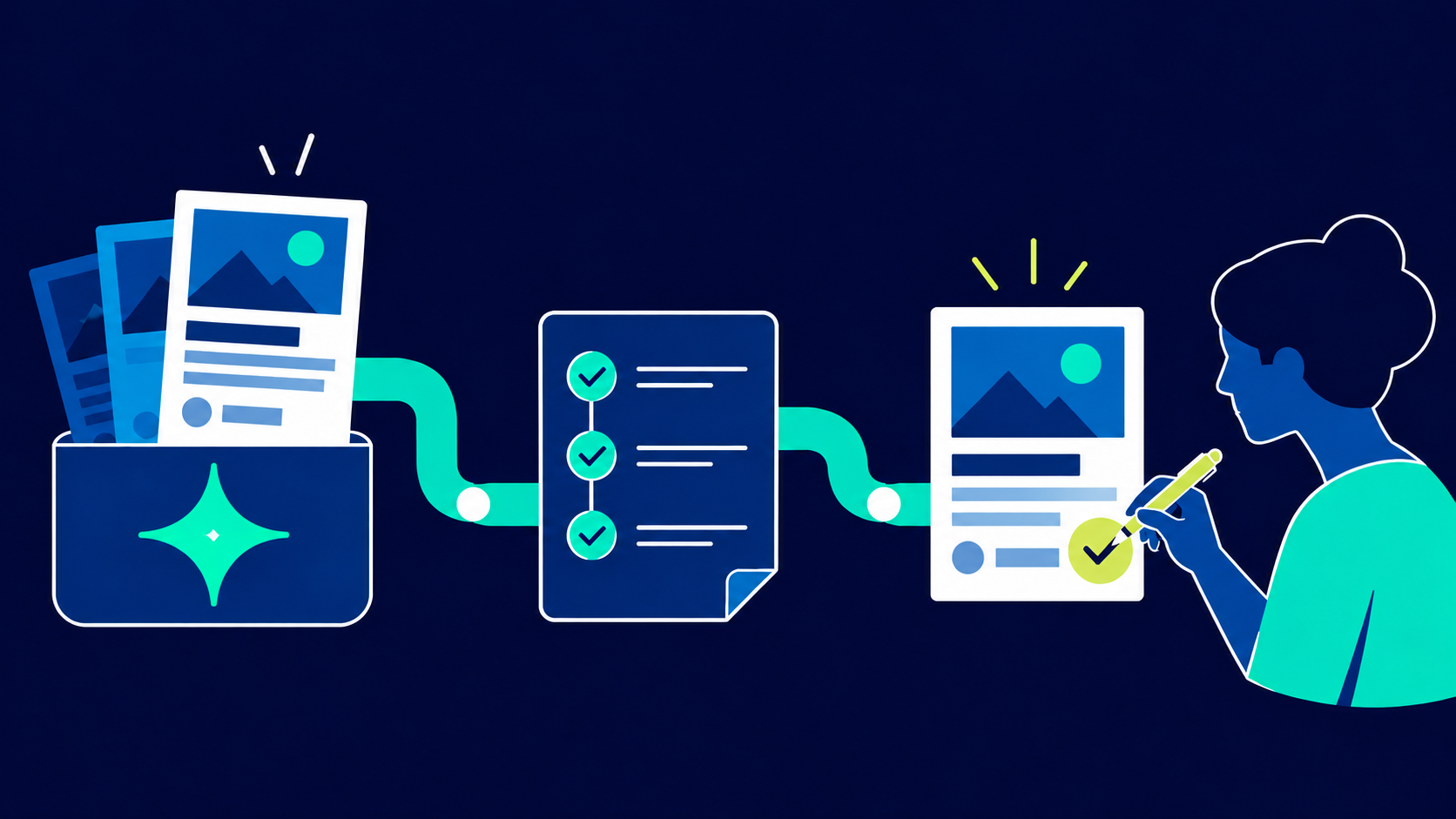
The wrong first question
Many leadership teams frame enterprise AI as a choice: wait for the AI features built into platforms they already use, such as their CRM or marketing automation system, or buy standalone AI tools for tasks like transcription or content drafting and let teams experiment.
This is a false choice. Both options improve efficiency within their respective platforms. However, challenges arise when work transitions between systems. For example, a campaign brief moves from an intake form to the CRM, then to creative tools, legal and brand review, and finally to ad platforms. At each handoff, native copilots lack visibility beyond their own platforms, and point tools generate assets that require manual copying, reformatting, and verification.
Productivity gains remain confined within individual tools, while enterprise value is lost during transitions between them.
Analysts expect this gap to get expensive. Gartner predicts that over 40% of agentic AI projects will be canceled by the end of 2027 due to escalating costs, unclear business value or inadequate risk controls.
The solution is not to replace automation with agents, but to design a governed orchestration layer. This layer should combine deterministic controls with bounded AI reasoning at the critical handoffs where context, judgment, and action intersect.
Four operating models, not a maturity ladder
Enterprise AI consists of four complementary models, not a ladder toward agent swarms. Two optimize work inside a tool; two coordinate work across systems.
Native platform AI. Copilots inside systems of record such as CRM, marketing automation or ad platforms. Best for local tasks close to trusted data. Limited by platform walls.
Point AI tools. Transcription, meeting prep, creative generation. Best for individual speed. Limited by no shared memory or connectivity.
Deterministic workflows. iPaaS, event-driven APIs, and automation engines. Best for clean data, known rules, and compliance-critical steps. Breaks on ambiguous inputs and unmodeled exceptions.
Governed orchestration. The layer that controls how models get context, which tools they may call, how task state is kept, how outputs are validated and when people are pulled in. Best for goal-directed work across systems where the path cannot be fully mapped in advance. Only as good as its guardrails and data contracts.
Most enterprises run the first three. The opportunity is the fourth.
AI proposes, rules decide, people approve
In the agent pilots I’ve seen fail, it’s often because teams attempted to replace deterministic workflows entirely. This approach is counterproductive. Anthropic recommends starting with the simplest effective pattern and introducing agency only where it provides measurable benefits.
If a step can be fully specified, such as validating an email domain or updating a field, it should remain deterministic. Salesforce’s architecture guidance makes the case that fixed logic gives predictable, auditable results and runs faster on high-volume tasks.[3]
However, rule-based pipelines become fragile as exceptions accumulate.
The operating principle I use is simple:
AI proposes. Models interpret unstructured input, research, and draft, using least-privilege, read-first tool access and a defined budget.
Rules decide what can be executed. Deterministic services sit between the model's reasoning and any change to a production system.
People approve of what carries consequences. Anything that fails a check or that is hard to reverse goes to a named human.
Because state is preserved, the system leaves a record of what it found, what it tried, and what it left unresolved. That record is what lets you widen autonomy over time. Autonomy is earned per workflow, not granted per platform.
What I learned building it
In my experience building agentic applications, the most challenging aspect was not developing the agents themselves. Frameworks such as CrewAI and LangGraph simplified the reasoning steps, while n8n and Zapier managed deterministic processes. The primary difficulty was determining, at each handoff, what the agent could access, how to define completion, and who was responsible for approval.
Marketing in practice: brief to launch
Campaign launches are a common point where marketing value is lost: briefs are manually re-entered, audience requests accumulate in queues, and tracking errors are identified only after budgets are allocated. Governed orchestration consolidates these steps into a single, stateful workflow:
AI: Interpret the brief. Extract objective, audience, offer, budget and timing; flag missing inputs against a campaign schema.
AI: shape the audience. Query permitted customer data and propose segments matched to the goal.
Rules: consent and compliance. Check audiences against consent flags, suppression lists, regional privacy rules, budget caps and naming taxonomy. If consent fails, the workflow stops.
AI: draft variants. Write copy per segment, checked against an approved claims library.
Rules: pre-flight QA. Confirm landing pages resolve, tracking parameters are consistent and creative meets platform specs.
People: approve what matters. Brand and compliance review a pre-validated package and sign off on regulated pricing, new claims or major spend.
Rules: launch and monitor. Approved campaigns push through APIs with every step logged. Hard thresholds freeze spend on cost spikes; media buyers decide on reallocation.
The same approach applies to the marketing-to-sales handoff. AI compiles an account dossier from inbound notes and authorized research, rules validate territory and CRM schema, and the account executive approves outreach. In both scenarios, personnel shift from data entry to decision-making.
Governance is architecture, not policy
Organizations that achieve scale integrate governance into their design processes, directly addressing Gartner's concern regarding inadequate risk controls.
The reference frameworks exist. The OWASP Top 10 for Agentic Applications[4] names risks such as goal hijacking and tool misuse. The NIST AI Risk Management Framework provides enterprise structure. In Europe, the AI Act's obligations for stand-alone high-risk systems now apply from December 2027.
In practice, four guardrails do most of the work:
Least privilege. Agents never inherit blanket access; tool calls default to read-only, scoped endpoints.
Pre-execution gates. Consequential actions, such as committing budget or emailing a customer, first pass validation and policy checks.
Bounded retries. A model correcting itself against a rule gets a strict limit, for example, two attempts, before escalating to a person.
Auditability. Every step is logged: what was queried, what context was passed, which checks ran, and who approved.
Connectivity standards facilitate integration but do not provide governance. The Model Context Protocol, now managed by the Linux Foundation's Agentic AI Foundation, and the Agent2Agent protocol support integration and reduce vendor lock-in. However, determining agent access and approval remains a design responsibility.
Who owns the layer
This layer operates at the intersection of the CMO's and CIO's domains. If developed solely by marketing, it lacks governance; if developed solely by IT, it overlooks essential business workflows.
The business owns which workflows to orchestrate, the rules, approval thresholds and outcome metrics.
Technology owns the platform, tool and access, identity, security and audit.
Both co-own data definitions, consent and data quality.
Each production agent should have an assigned business owner and a designated technical owner.
Choosing where to start
Test each candidate workflow with four questions:
Can the full path be specified today? If yes, keep it deterministic.
Does it stall on unstructured context or ambiguous intent? If yes, add bounded reasoning at that handoff.
Can the output be verified against a clear schema or rubric? If not, sharpen the definition before automating execution.
What happens if it is wrong? As reversibility drops and impact rises, add gates and human approval.
Your first 90 days
Days 1 to 30: Pick one high-friction, cross-system workflow. Map every handoff, label each step as deterministic, ambiguous or consequential, assign owners, and record baselines.
Days 31 to 60: Build it. Define schemas, rules, retry limits and approval gates before writing prompts. Start read-only.
Days 61 to 90: Run in shadow mode or with full human review. Measure the workflow, not the model: cycle time, escalation rate, human override rate, cost per completed workflow and errors caught after execution. Then widen autonomy, refine or stop.
Without established baselines, future budget discussions will rely on anecdotal evidence rather than measurable outcomes.
The question that matters now
Native AI and point tools will continue to improve. Sustainable advantage will belong to organizations that design the connective layer: automation for predictable tasks, AI for ambiguous steps and people for consequential decisions.
The critical question is no longer which AI tools to purchase, but whether you are intentionally designing the handoffs between them.
About the Author
Sumit Bhagchandani is an Atlanta-based marketing technology and AI executive with 20+ years leading MarTech at Hertz, Ansira, and Discover Financial Services, most recently building Goodway Group’s first agentic AI practice. He builds and deploys production AI agents using LangGraph, CrewAI, and n8n, and helps leaders cut through AI hype to deliver results that stick. He is the creator of 3 Lines of MarTech and is exploring his next opportunity in MarTech and AI transformation.
Connect with Sumit on LinkedIn.
This piece was written by the contributor, with AI assistance during research, editing, fact-checking, and refinement. Final wording and judgment are the contributor's own.
References
Gartner, "Gartner Predicts Over 40% of Agentic AI Projects Will Be Canceled by End of 2027" (June 25, 2025).
Anthropic, "Building Effective Agents" (December 19, 2024).
Salesforce Architects, "Determining Agentic vs. Traditional Workflow Automation."
OWASP GenAI Security Project, "OWASP Top 10 for Agentic Applications for 2026" (December 2025).
European Parliament, "Digital Omnibus on AI," Legislative Train.
Model Context Protocol Blog, "MCP Joins the Agentic AI Foundation" (December 9, 2025).
Linux Foundation, "Linux Foundation Launches the Agent2Agent Protocol Project" (June 23, 2025).
Ready to Explore AI for Your Marketing Team?
Whether you're just getting started or looking to scale, Spark Novus helps marketing teams build the skills, systems, and strategy to use AI with confidence. Let's talk.
FAQs
-
It means AI handles interpretation, research and drafting, deterministic rules decide what can be executed in production systems, and a named person approves anything that fails a check or is hard to reverse.
-
Because native copilots can’t see beyond their own platforms, and point tools produce assets someone has to copy, reformat and verify by hand. The gains stay inside individual tools while value is lost at the handoffs between them.
-
Gartner predicts that over 40% of agentic AI projects will be canceled by the end of 2027 due to escalating costs, unclear business value or inadequate risk controls.
-
No. If a step can be fully specified, such as validating an email domain or updating a field, it should stay deterministic. AI reasoning belongs only at handoffs that stall on ambiguous input or exceptions no one planned for.
-
Both. The business owns the workflows, rules, approval thresholds and outcome metrics, while technology owns the platform, access, security and audit. Each production agent should have a named business owner and a named technical owner.
-
Bhagchandani builds agentic applications using CrewAI and LangGraph for reasoning steps and n8n and Zapier for deterministic processes. He found the hardest part was defining, at each handoff, what the agent could access, what counted as done and who approved it.
-
Start small: pick one cross-system workflow, such as brief to launch, and label each handoff as deterministic, ambiguous or consequential. Record baselines like cycle time and escalation rate before building anything, so you can measure what changes.