
How AI can Fuel Human Creativity in Modern Marketing
AI fuels human creativity in modern marketing by expanding idea possibilities while people supply the insight and direction that bring those ideas to life.
Teams across the industry are beginning to see that AI is not a replacement for imagination. It is a tool that widens the creative field so marketers can explore more options, spot stronger pathways, and shape concepts with greater clarity. This shift is becoming especially important as brands prepare their 2026 plans and look for ways to activate AI without losing the human strengths that make marketing meaningful.
This was the focus of a recent hands-on session Spark Novus ran in Atlanta, hosted by the team at Setup, where marketing leaders explored how to bring a fictional product to life using human creativity paired with AI tools.
The workshop lit up fast as marketers rallied around one shared brief and jammed with AI in real time. Ideas flew, AI tossed in wild twists, and the room kept leveling each concept with sharp insight and laughter. What started as a simple prompt turned into a creative surge that pushed the original idea far beyond what anyone imagined, showing just how fun and powerful human plus AI collaboration can be.
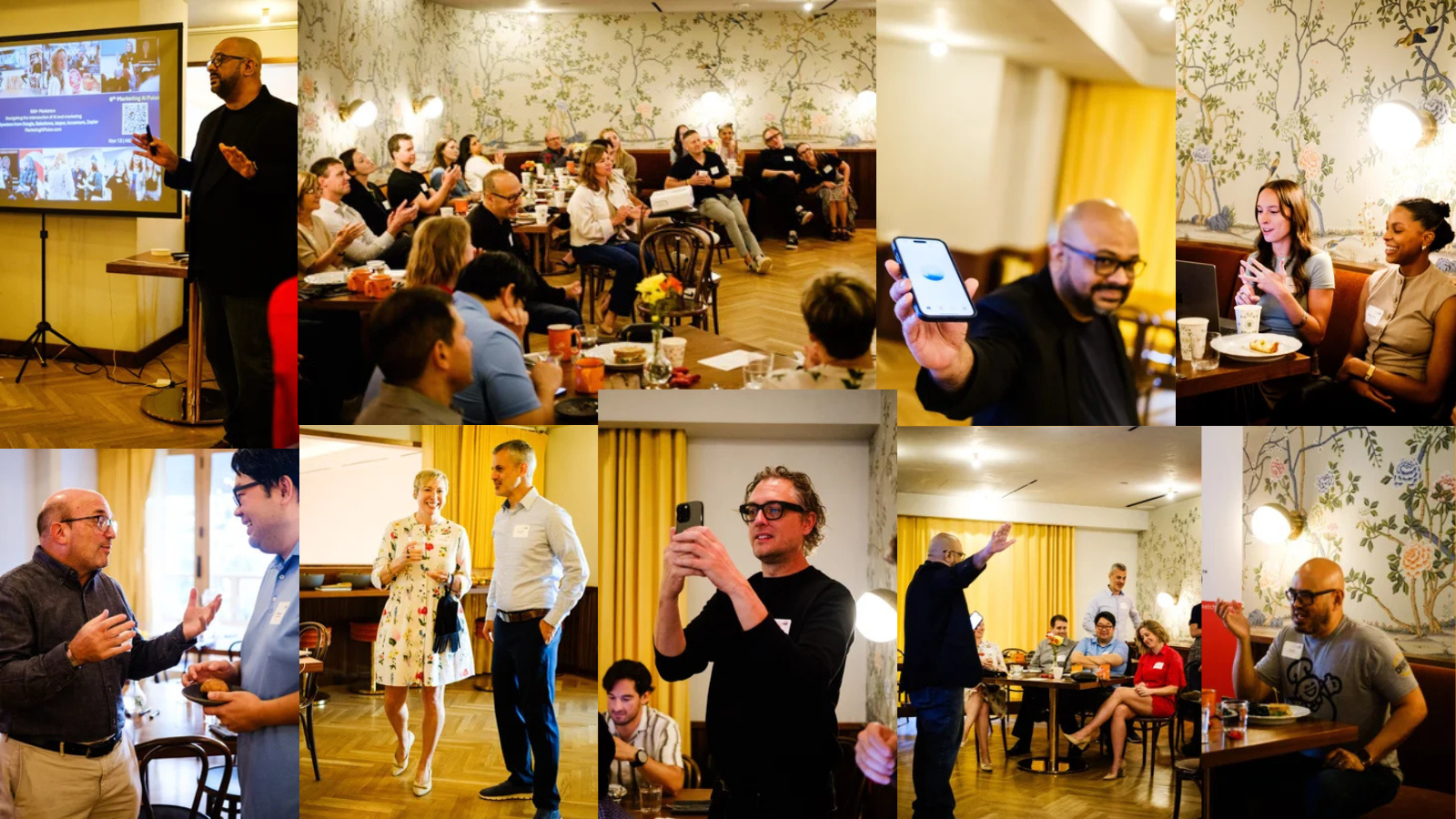
A room full of marketers, one shared creative brief, and a whole lot of sparks. This workshop turned into an off the charts mix of ideas, collaboration, and AI fueled imagination. When people come together with curiosity and play, the energy is unmistakable.
How AI Supports Human Creativity
AI supports creativity by accelerating early stage thinking. It generates variations at a speed that helps teams bypass the blank page and move directly into exploration. The value comes not from the drafts themselves but from the way those drafts prompt new questions and sharper decisions.
When teams treat AI as a creative partner rather than a shortcut, the interaction becomes energizing. Marketers begin shaping ideas instead of searching for them. They spend more time refining the work that matters and less time getting started.
What Collaboration with AI Looks Like in Practice
In the workshop where marketers worked together on a shared brief while using AI to test directions and expand possibilities, the energy shifted as people reacted to early outputs, layered their perspectives, clarified what resonated, and reshaped the narrative collectively.
The moment that stood out most was not the AI output. It was the way people built momentum by responding to one another. AI introduced options. People defined the meaning and selected the path that aligned with their vision. The result was a creative leap that reflected both human judgment and accelerated exploration.
Why Human Intuition Still Drives Marketing
AI can propose ideas, but it cannot determine relevance. Marketers bring essential understanding to the process. They recognize emotion, brand truth, audience nuance, timing, and context. These elements shape whether an idea works in practice.
Human intuition ensures creativity stays grounded in purpose. It guides which directions feel true to the brand and which ones should be redesigned or discarded. AI generates possibilities. People make them valuable.
How Leaders Can Build Creative AI Practices
Marketing leaders who want stronger creative output in the future can create environments where teams learn to work with AI confidently. A few principles consistently make the difference:
Encourage exploration
Teams produce stronger ideas when they can try new approaches without pressure.
Promote shared problem solving
Collective creativity improves when people build on one another’s insights with AI as a support.
Clarify that AI amplifies human strengths
Teams adopt AI more willingly when they see it as a tool that enhances their capabilities rather than replacing them.
Connect creativity to business outcomes
AI driven exploration should support speed, quality, and consistency across the marketing ecosystem.
When these conditions are present, AI adoption feels natural. Teams generate more ideas, refine them faster, and gain confidence in how they contribute to the work.
Why This Matters for future Planning
Teams will face increasing pressure to operate with greater clarity and efficiency as AI becomes more embedded in marketing workflows. Creativity becomes a strategic advantage when AI accelerates early thinking and people elevate the final decisions.
Leaders who create intentional moments for collaboration will see faster alignment, stronger ideas, and a more energized team culture. As AI continues to evolve, the organizations that thrive will be the ones where technology and human talent move together.
FAQs About How AI Fuels Human Creativity
-
AI improves creativity by expanding the range of ideas teams can explore at the earliest stages. It quickly generates variations that give marketers more starting points and more opportunities to refine direction. This helps teams move into high value thinking sooner and with greater clarity.
-
Human insight ensures ideas reflect emotion, audience understanding, and brand integrity. People provide judgment that AI cannot replicate. They determine which ideas hold value and how those ideas should evolve.
-
Leaders can introduce collaborative exercises, set clear expectations about how AI supports rather than replaces creative thinking, and create an environment where exploration is encouraged. This builds confidence and leads to stronger outcomes.
-
AI should serve as a creative and operational accelerant. It supports early idea development, improves content consistency, and frees teams to focus on strategy and insight. Its value grows when it is integrated into workflows with human judgment at the center.
Bring This Experience to Your Team
If your teams would benefit from a collaborative AI creativity workshop, Spark Novus can help you design a session that builds confidence and unlocks new ideas. Reach out and let’s explore what this could look like for your organization.