How Paid Media Is Changing in 2026 and What It Means for Your Business
The paid media platforms your marketing strategy depends on have changed structurally, and the brands that understand the new logic will have a measurable competitive advantage over those still operating on the old one.
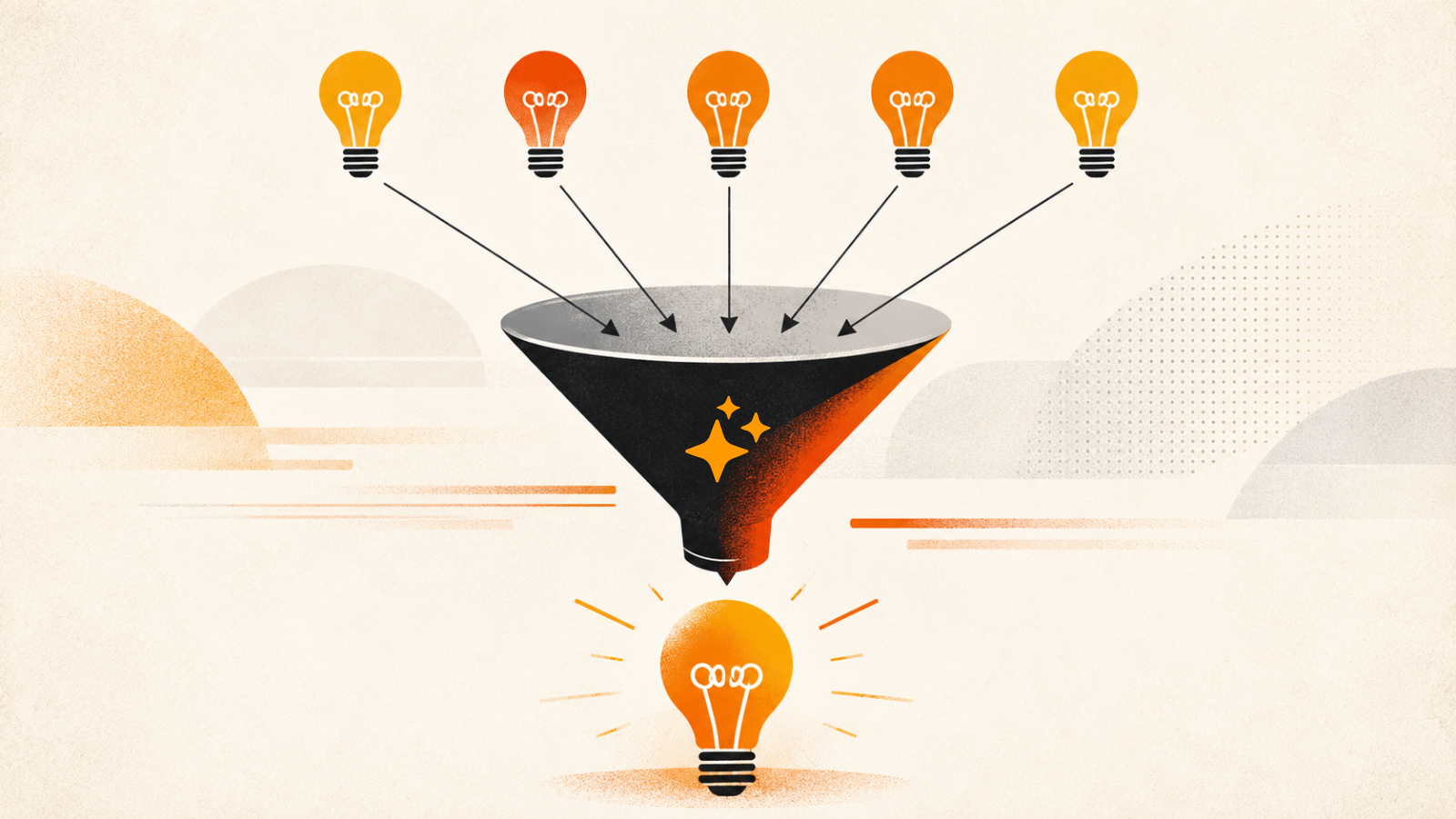
Google, Meta, TikTok, LinkedIn, Amazon, ChatGPT, and Perplexity have all made significant moves in the past 18 months. The story is not one of disruption for its own sake. The platforms are converging on a clear new operating model, and marketing leaders who understand that model have a genuine strategic advantage over those still trying to interpret what it all means.
What follows covers the strategic implications for your business and how paid media teams, agency relationships, and channel strategy need to evolve. A platform reference section follows for practitioners briefing agencies or internal teams.
Brands That Embrace Automation on Their Own Terms Will Pull Ahead
Google, Meta, TikTok, and LinkedIn have all moved in the same direction. Their AI systems now handle most of the decisions that media buyers used to make manually: which audiences to target, which creative to serve, how much to bid, and where to place ads. This is not a trend that is arriving. It is already the default operating environment across the major platforms.
The competitive dynamic has changed as a result. For most of the past decade, advantage in paid media came from execution: sharper keyword lists, tighter audience segmentation, and smarter bid management. Those levers are being absorbed by the platforms themselves. The new sources of advantage are upstream. Brands with stronger first-party audience data, more complete product catalog information, cleaner conversion tracking, and better-defined campaign inputs are giving the algorithm better material to optimize against. That difference shows up directly in cost per acquisition and return on ad spend.
The practical implication for a CMO is not to hire more campaign managers or find a more sophisticated agency. It is to build the data infrastructure, measurement capability, and input quality that makes algorithmic optimization work harder for your brand than for your competitors. The brands that invest in that foundation now will have a structural performance advantage that compounds over time.
Ad Content Strategy Has Become the Primary Competitive Lever
The platforms can now automatically produce thousands of versions of your ads. What they cannot do is decide what your brand stands for or why someone should choose you. That strategic brief is the work that separates performance at scale.
Meta's Advantage+ system generates hundreds of ad variations from a single creative asset. Google creates headlines and landing page copy directly from your website. TikTok's Auto Selection tool picks from creator content, product assets, and AI-generated video to find what performs best. The execution layer of paid media is becoming increasingly automated across every major platform.
What cannot be automated is the brief that sits upstream of execution. What is the core message? Which audience segment gets which angle? What problem does this product solve, and for whom? What makes this brand genuinely different from the alternatives? The algorithm will optimize whatever you point it at, but if the underlying positioning is weak or undifferentiated, automation scales that weakness faster.
For marketing leaders, ad content strategy deserves a more senior owner and a more deliberate process than most organizations currently give it. The question is not whether you have enough assets. It is whether your messaging is sharp enough, specific enough, and differentiated enough to give the machine something worth optimizing. TikTok makes this particularly clear: on that platform, even the best automation cannot compensate for content that feels like a traditional ad. Authenticity and creative relevance to the platform context are table stakes, and no algorithm can manufacture them.AI Is Reshaping Where Purchase Decisions Form Before Paid Ads Enter the Picture
A growing number of buyers are researching and shortlisting on AI tools before they ever see a paid ad on Google or Meta. The top of the funnel has moved, and most paid media strategies have not followed it yet.
ChatGPT launched advertising in February 2026 and surpassed $100 million in annual recurring revenue within 60 days. Amazon rebuilt its entire product discovery experience around Alexa for Shopping, an AI assistant that answers purchase-intent questions before a shopper ever reaches a standard search results page. Perplexity, after testing advertising, exited the format entirely in February 2026 because its own research showed that ads reduced user trust in AI-generated answers.
These three developments point to the same underlying shift. Consumers are increasingly forming purchase intent inside AI conversations rather than on search results pages or social feeds. A brand can run technically excellent campaigns on Google and Meta and still be missing the moment where the decision is actually being shaped.
The emerging question for CMOs is not simply which AI surfaces to buy ads on. It is how organic presence in AI answers, through content authority, structured product information, and answer-engine visibility, compares as an acquisition lever to paid ads on those surfaces. That is a budget allocation and channel mix question most organizations have not answered yet. Not every AI surface will become an ad channel, and the ones that do will require a meaningfully different approach than traditional search or social.
What Marketing Leaders Should Now Expect From Their Agency Partners
The traditional agency value proposition was built around managing campaigns better than you could yourself. The platforms are taking over most of that work. The agencies worth investing in are the ones that help you build the inputs the algorithm needs, not the ones managing the execution the algorithm now handles.
The shift toward algorithmic campaign management compresses the core of what most paid media agencies have historically delivered. Manual optimization, bid management, audience segmentation, and platform-specific campaign architecture were the craft of agency media buying. Those capabilities still matter, but they are no longer the primary source of value in a world where AI handles most of those decisions automatically.
The agencies that will provide the most value lead with strategic architecture rather than campaign execution. That means advising on how to structure creative testing programs that feed the algorithm, how to build first-party data infrastructure that improves targeting quality, how to design measurement frameworks that capture full-funnel outcomes rather than last-click attribution, and how to develop ad content strategy that gives automated systems sharp, differentiated material to work with.
Platform certifications and campaign management processes are table stakes. The more important questions are: How do you approach ad content strategy for automated campaigns? What does your data and measurement practice look like? How do you help us build competitive advantages that compound over time in an automated environment? Agencies that cannot answer those questions with specificity are operating on a model the platforms have largely made obsolete.
An Emerging Picture of What High-Performing Paid Media Teams Look Like in 2026 and Beyond
If your paid media team is organized primarily around platform specialists, you are paying for skills the platforms are absorbing. The roles that create competitive advantage now are different, and the gap between organizations that have made that shift and those that have not is growing.
Organizations that built headcount around Google Ads managers, Facebook buyers, and programmatic traders are carrying roles whose core function is being automated. That does not mean those people have no value. It means their value is increasingly in the strategic and analytical layers of the work, not in manual campaign execution. Three capability areas are growing in importance.
The first is data and measurement. Marketing data engineers who can build and maintain first-party data pipelines, integrate CRM data with ad platforms, and design attribution models that connect paid media investment to revenue outcomes are increasingly critical. Automated platforms optimize to the signal you give them. The quality of that signal determines the quality of the result.
The second is ad content strategy. Strategists who can develop positioning frameworks, define audience-specific messaging hierarchies, brief creative for automated testing environments, and evaluate performance at the message level are in higher demand than execution-focused campaign managers. This role sits at the intersection of brand strategy and performance marketing, and most organizations do not have a clear owner for it.
The third is analytics and optimization. Specialists who can run incrementality tests, build multi-touch attribution models, and translate paid media performance into business-level reporting give CMOs what they need to defend budget, make channel allocation decisions, and demonstrate contribution to revenue. As platforms automate more execution decisions, independent measurement capability becomes more important, not less, because in-platform reporting becomes less reliable as a single source of truth.
CMOs planning headcount decisions should evaluate whether new hires and current roles are oriented toward managing inputs and measuring outcomes, or toward managing campaigns manually. The answer to that question points toward a different kind of team structure and, in many cases, a different kind of agency relationship than the one currently in place.
Platform Snapshots
The following is a factual reference on what each major paid media platform is doing right now. Each entry opens with a plain summary followed by key details relevant to paid media strategy.
Google is replacing manual keyword and campaign controls with an AI system that makes most targeting and creative decisions automatically, and embedding ads directly inside AI-generated answers at the top of search results.
Campaigns using the full AI Max feature suite see an average of 7 percent more conversions at a similar cost per acquisition, according to Google's own product data. Starting in September 2026, Dynamic Search Ads and campaign-level broad match settings will auto-upgrade to AI Max with no option to opt out. Ads inside AI Overviews have expanded from U.S. mobile to desktop and global markets. Learn more at Google Ads and Commerce Blog
Meta
Meta is automating campaign management to the point where advertisers will eventually need to provide only a URL and a budget, and the system handles everything else.
According to Meta's investor communications, for every dollar spent with AI-enabled Advantage+ products, advertisers generate an average of $4.52 in revenue. Meta's Andromeda system generates hundreds of ad variations from a single asset. Full creative automation for all advertisers is expected later in 2026. Learn more at Meta for Business
ChatGPT
OpenAI launched advertising inside ChatGPT in February 2026. Ads appear at the bottom of responses for free-tier users, clearly labeled and separate from AI-generated content.
ChatGPT processes 2.5 billion prompts daily. OpenAI's ad business surpassed $100 million in annual recurring revenue within 60 days of launch. Ads are live for Free and Go tier users in the United States, with international expansion underway. OpenAI has confirmed that ads do not influence answers and that conversation data is never shared with advertisers. Learn more at OpenAI Blog
Perplexity
Perplexity tested advertising, concluded it was incompatible with the trust its users require, and exited the format entirely in February 2026. After launching an ad experiment in November 2024, Perplexity stopped accepting new advertisers in October 2025. Fewer than 0.5 percent of applicants were ever admitted. Company executives told the Financial Times that advertising made users question whether answers were commercially influenced. Perplexity now operates on a subscription model. Learn more at Campaign US
Amazon
Amazon renamed its AI shopping assistant to Alexa for Shopping and embedded it across the entire purchase journey, changing how product discovery works before a shopper reaches a standard search results page.
Alexa for Shopping, formerly Rufus and renamed May 13, 2026, uses natural language processing to interpret purchase intent rather than matching keywords. Sponsored Prompts, in open beta in the United States, place brands inside AI shopping conversations at the moment of purchase-ready questioning. Amazon automatically extends eligible Sponsored Products campaigns into these placements. Product listing quality, A+ content depth, and review ratings are now direct drivers of both organic and paid AI visibility. Learn more at Amazon Advertising
TikTok
TikTok has significantly expanded its automated campaign platform in 2026. Content that works on TikTok is fundamentally different from every other platform, and automation cannot substitute for that.
TikTok World 2026, held May 13, 2026, announced Smart+ modular automation, Auto Selection for creative, Branded Buzz for large-scale creator campaigns, and Search Hubs for brand visibility at the top of TikTok search results. According to TikTok's own data, 70 percent of users discover new brands on the platform and 61 percent have made a purchase after seeing content there. Creator-led and authentic content consistently outperforms produced ad creative. Learn more at TikTok for Business Newsroom
LinkedIn has made it significantly more cost-effective to run B2B campaigns using AI automation, and is building measurement infrastructure to connect ad spend directly to pipeline and revenue.
LinkedIn's Accelerate tool automates targeting, creative, bidding, and placement. According to LinkedIn's analysis of 67 A/B tests, Accelerate campaigns deliver up to 42 percent lower cost per action compared to standard campaigns, and advertisers built campaigns 15 percent more efficiently. LinkedIn is expanding CRM integration and revenue attribution to connect campaign activity to business outcomes at the account level. Learn more at LinkedIn Accelerate
Ready to Rethink Your Paid Media Approach?
The platforms have changed. The question is whether your strategy, your agency relationship, and your team structure have kept pace. If you want a clear-eyed assessment of where your paid media investment is working and where the gaps are, we can help. Contact Spark Novus to start the conversation.
-
The primary shift is that execution is no longer the main source of competitive advantage. Google, Meta, TikTok, and LinkedIn now automate most of the targeting, bidding, and creative decisions that media buyers used to make manually. Competitive advantage has moved upstream to data quality, ad content strategy, and measurement infrastructure. Brands that invest in those inputs give the algorithm better material to work with, and that difference compounds into lower cost per acquisition and higher return on ad spend.
-
The most valuable paid media agencies in 2026 lead with strategic input rather than campaign management. Ask prospective partners how they approach ad content strategy for automated campaigns, what their first-party data and measurement practice looks like, and how they help clients build durable competitive advantages. Agencies that lead with platform certifications and campaign management processes are offering capabilities the platforms are absorbing. The strategic and measurement layers are where agency value now lives.
-
The roles growing in strategic value are marketing data engineers who build first-party data pipelines, ad content strategists who develop positioning frameworks for automated environments, and analytics specialists who run incrementality tests and connect paid media to revenue. Platform specialist roles focused on manual campaign execution are declining in value as automation absorbs that work.
-
Alexa for Shopping changes the discovery layer above Amazon search. The system uses natural language processing to interpret purchase intent rather than matching keywords. Brands that invest in product listing quality, A+ content depth, and review management are building both organic and paid visibility inside the AI layer. Sponsored Prompts, currently in beta, place brands inside AI shopping conversations at the moment a shopper is asking purchase-ready questions.
-
ChatGPT advertising launched in February 2026 and is available to Free and Go tier users in the United States. The platform is early stage and the audience is currently limited to non-paying subscribers. The more important near-term question is how your customers are using AI in the research and consideration phase of buying, and whether organic content and answer-engine visibility is capturing that moment. Paid presence on ChatGPT will matter more as the platform matures.
-
Perplexity exited advertising in February 2026 after concluding that ads made users question whether AI-generated answers were commercially influenced. Fewer than 0.5 percent of brands that applied to advertise were ever admitted. The decision signals that AI answer engines will not uniformly become ad-supported channels. Brands planning for AI search should not assume that paid placement will be available or effective on every platform.
-
Ad content strategy is the upstream brief that defines what your brand stands for, what problem you solve for which audience, and why someone should choose you over a competitor. It is distinct from creative production, which the platforms can now largely automate. Ad content strategy matters more in an automated environment because the algorithm optimizes whatever you give it at scale. If the positioning is undifferentiated, automation amplifies that weakness. Most organizations do not have a clear owner for this work, and that gap is increasingly showing up in performance.