
Prototype Your Differentiators in Files First, Then Ship on the Platform: A Crawl-to-Walk Path for Content Marketers
By guest contributor: Walt Rolle is the founder of Light 516. He is a valued member of Marketing AI Pulse. For more on his background, perspective, and experience, see the bio below.
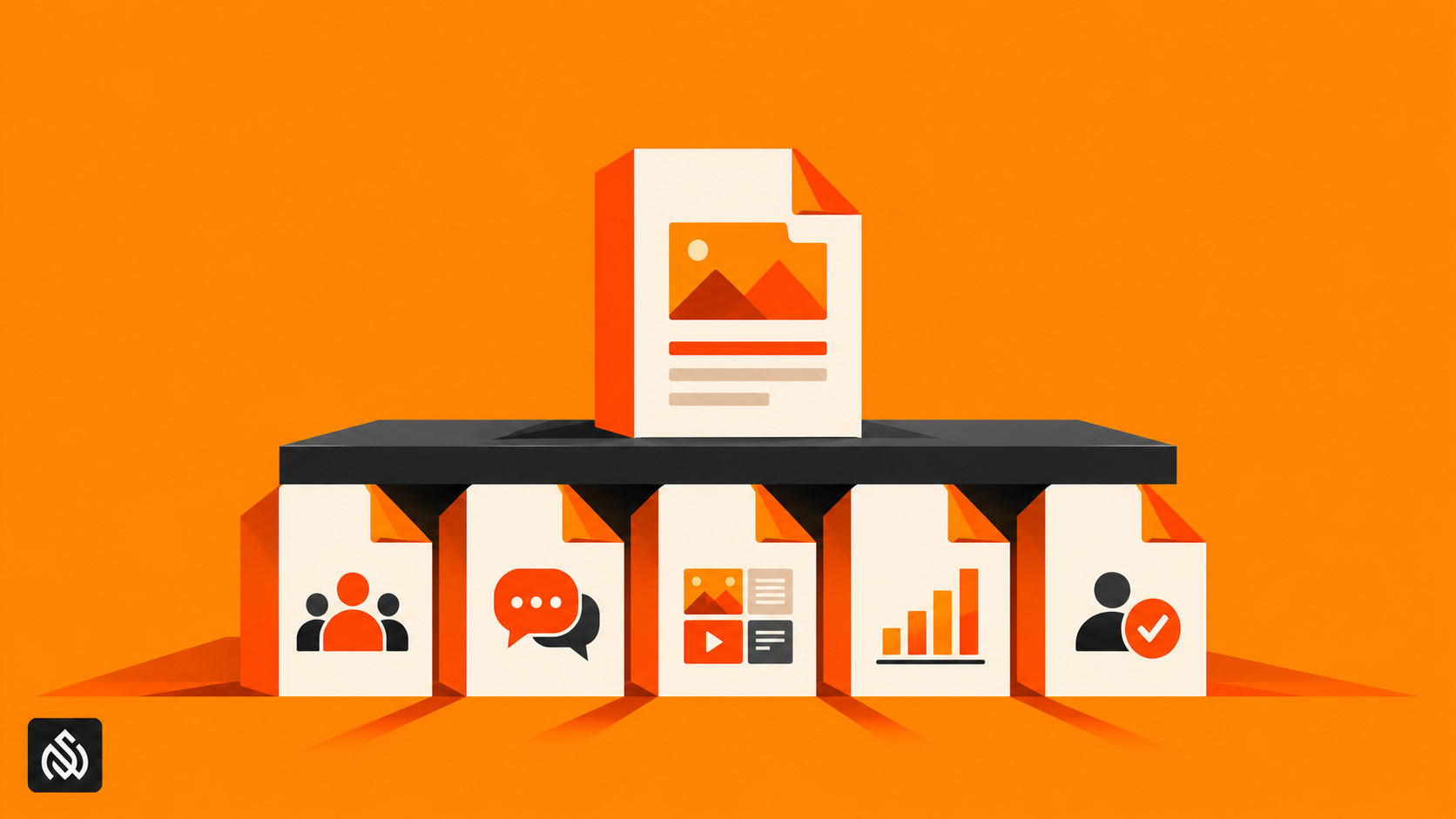
Creating distinct, on-brand content with generative AI starts before the platform, by structuring the inputs that make your work distinct. Done well, AI can extend your point of view across channels with less rework. Here’s how to build that foundation before you scale.
One of the top concerns I hear from marketers is how to reliably balance the use of generative AI with the authenticity of original writing. Readers have started rejecting content that reads as machine-made: Klaviyo's 2026 AI Consumer Trends report found that only 7% of consumers say visible AI-generated marketing makes them trust a brand more, while 32% say it makes them trust the brand less. At the same time, the pressure to publish more, across more channels, keeps climbing. HubSpot's trends report backs this up: confidence with AI is rising, but the pressure hasn't moved. Teams are still burning out, still fighting to prove ROI, and still chasing platform changes. There is no button that resolves that tension. But there is a repeatable path between letting AI do everything and doing everything by hand, and it starts before you make a large platform investment: prototype your differentiators in files first, then ship on the platform.
Your differentiators and learned experience are the moat
One failure mode to be aware of is the reaction to disappointing output. If there are issues with the inputs, they're unlikely to be resolved by a better model. Secondly, manual workarounds or abandoning tools bring you back to efficiency square one. An Optimizely survey of more than 2,000 B2B marketers found that about three-quarters spend at least three hours a week editing, fact-checking, or fixing AI-generated content. In the builds I ran this year, the model was almost never the limiter. The missing input was a codified point of view the tool could read: who the work is for, how the brand sounds, what proof it can stand on, and how success gets measured. Generative AI is good at the ‘invisible’ research and the first-draft labor, which can free someone up for more strategic analysis and for incorporating human judgment.
Buyers are also meeting your point of view through AI intermediaries now, not only on your website. An SEO guide by DigitalApplied found that roughly 83% of searches with an AI Overview end in no click at all. Bain & Company's December 2024 survey found that roughly 80% of consumers rely on zero-click results for at least 40% of their searches, and that traditional search traffic would fall 15 to 25 percent as a result. What gets surfaced in that environment is whatever you've captured clearly enough for a machine to retrieve and represent. I've spent the last 10 years focused on customer engagement solutions, with a heavy focus on content management systems, personalization engines, and marketing operations architecture. The same conclusion held from before the rise of Gen AI: the platform was rarely the constraint. The friction holding marketers back is a deficiency in the structured inputs.
The method: prototype in files
The crawl is a short sequence I run before generating anything at scale. Five steps, each one a file the tools can read.
Capture the ICP. Write down who the work is for, the situation they're in, and the constraint they're under, in a document the model can reference, not a persona slide that nobody opens.
Codify the voice. Turn “sounds like us” into explicit rules: sentence length, words you use, words you avoid, how formal to be. WordStream's guide to AI brand guidelines makes the same point. The more you specify voice upfront, the less time you spend fixing output that doesn't sound like you.
Modularize the content and farm the playbooks. Break your best material into reusable blocks, then feed in industry best-practice inputs and real customer-conversation notes. Check every source before it goes in. Incorrect data scales with the solution just as fast as correct data, so it matters that the content and data points going in are right.
Codify the measurement plan. Decide the KPI before you generate, not after. Name what each piece is supposed to move: a product comparison page might be measured on demo requests, a nurture email on reply rate rather than opens. Gen AI is less likely to optimize toward a target that isn't explicitly defined.
Run the orchestrator loop. You sit over an iterate-and-review loop with human approval, not a one-shot prompt. The tool drafts; you decide what ships. Even beyond content marketing, an exercise I find myself revisiting is how to set up the tools where I can place myself in a review and approve cycle. This way of thinking often leads to the correct architecture.
None of these steps are exotic. What makes them work together is sequence. Each file you write upfront is leverage that the tools apply every time you generate after that.
Ship on the platform
Once the differentiators live in files, the next phase involves configuring your platform(s) to embody the structure you just designed. For content marketing, this primarily involves the tools you acquired to design, create, manage, review, and publish content. If you have a reliable CRM set up, consider connecting this as well. One thing it can do is incorporate relevant context like your business's segmentation characteristics and customer feedback. Take the anchor idea and adapt it per channel rather than posting the same block everywhere. Then let the measurement plan from step four close the loop, so each round tells you what to optimize in the content.
Carefully designing the right inputs and process sequence saves time later, when it's time to scale. For example, jumping to the tools first can result in extra time spent correcting output, because the design behind the configuration hasn't been optimized yet. Start in the files, and that same effort goes into approving output instead of fixing it. If you have ever been part of a digital transformation that involved content management, you have already seen this at work. Remember how much time was spent on content strategy? It was paired with the warning: the platform is a tool, it doesn't automatically fix your content organization. Winning teams pursued better structure, reduced stale data, and established a campaign-based management culture. The teams that struggled lacked resources to clean these items up and make changes. Feeding that into an AI system doesn't fix it. It scales the mess.
What this looked like in my builds this year
A few concrete outcomes from this year, none of which would have fit the timeframe without the upfront file work. A direct-to-consumer storefront went from brief to live in under three days. A direct purchase option for a book, built for an expert service provider, took about the same amount of time, roughly three days end to end. The content plan consumed the smallest percentage of the time compared to rolling my own Next.js code on that one, deployed to Vercel, integrated with Stripe. Two brochure sites, each shipped in under a week. On GA4 work, I keep a metadata habit: naming and documenting each event as I set it up. That now saves about half a day per reporting cycle, because the analysis layer doesn't have to reverse-engineer what an event was supposed to mean.
The pattern holds on the internal builds too. Preparation for a webinar campaign that would have run close to 100 hours came in under 20, because the ICP, voice, and measurement files already existed and the tools worked from them. A revenue-scoring pass ranked 1,000 accounts in about an hour of async processing and surfaced a shortlist of 75 worth pursuing. None of that is the model being clever. It's the model applying differentiators I captured once and then reused on every run.
The whole game is the capture
Without the preparation, a Gen AI model will draft what you ask it, grounded in the same knowledge everyone else has access to. General knowledge cannot decide who the work is for, what it's allowed to claim, and why you know it worked. That information has to be documented by you before any of the scale is worth having. In 2026, the adjustment to content marketing labor skews heavily toward the upfront work. This is a material and unavoidable change we all face. Those who embrace it do so through continuous learning and experimentation.
About the Author
Walt Rolle is the founder of Light 516, a Principal Solutions Architect applying AI for revenue-focused teams. He helps marketers turn stalled AI experiments into live, measurable workflows in production. Over the past decade, he has deployed dozens of digital transformations to improve customer engagement with content management systems, personalization, omni-channel delivery, CRM, and commerce for enterprise brands. He builds fixed-price AI systems that scale a company’s own differentiators instead of generic output, keeping the work governed and measurable. Connect on LinkedIn: https://www.linkedin.com/in/wrolle
Sources
https://www.klaviyo.com/marketing-resources/ai-consumer-trends
https://blog.hubspot.com/marketing/hubspot-blog-marketing-industry-trends-report
https://www.optimizely.com/field-notes/guides/optimizely-2026-global-study
https://www.digitalapplied.com/blog/ai-search-seo-statistics-2026-definitive-collection
https://www.bain.com/insights/goodbye-clicks-hello-ai-zero-click-search-redefines-marketing
Ready to Explore AI for Your Marketing Team?
Whether you're just getting started or looking to scale, Spark Novus helps marketing teams build the skills, systems, and strategy to use AI with confidence. Let's talk.
FAQs
-
It means writing down your ICP, brand voice rules, best content examples, and measurement plan as actual documents before you configure any AI or marketing platform, so the tool has specific inputs to work from instead of generic training data.
-
Because the model is missing a codified point of view: who the content is for, how the brand sounds, what proof it can cite, and how success is measured. Without those inputs, AI defaults to the same general knowledge everyone else has access to.
-
An Optimizely survey of more than 2,000 B2B marketers found that about three-quarters spend at least three hours a week editing, fact-checking, or fixing AI-generated content.
-
Klaviyo’s 2026 AI Consumer Trends report found that only 7% of consumers say visible AI-generated marketing increases their trust in a brand, while 32% say it decreases trust.
-
Roughly 83% of searches with an AI Overview end in no click, per DigitalApplied, and Bain & Company’s December 2024 survey found about 80% of consumers rely on zero-click results for at least 40% of their searches. If your point of view isn’t captured clearly enough for AI to retrieve and represent, you’re invisible in that channel.
-
In his builds this year, Rolle documented client differentiators and brand voice in structured files first, then connected those files to AI content and automation tools. That sequencing cut revision cycles and kept output on-brand because the inputs were specific from the start, not generic.
-
Start small: write down your ICP, three brand voice rules, and your two best-performing pieces of content as reference files. Feed those to whatever AI tool you already use before asking it to draft anything, then measure the edit time on what comes back.