
What Is MCP, and Why Should CMOs Care?
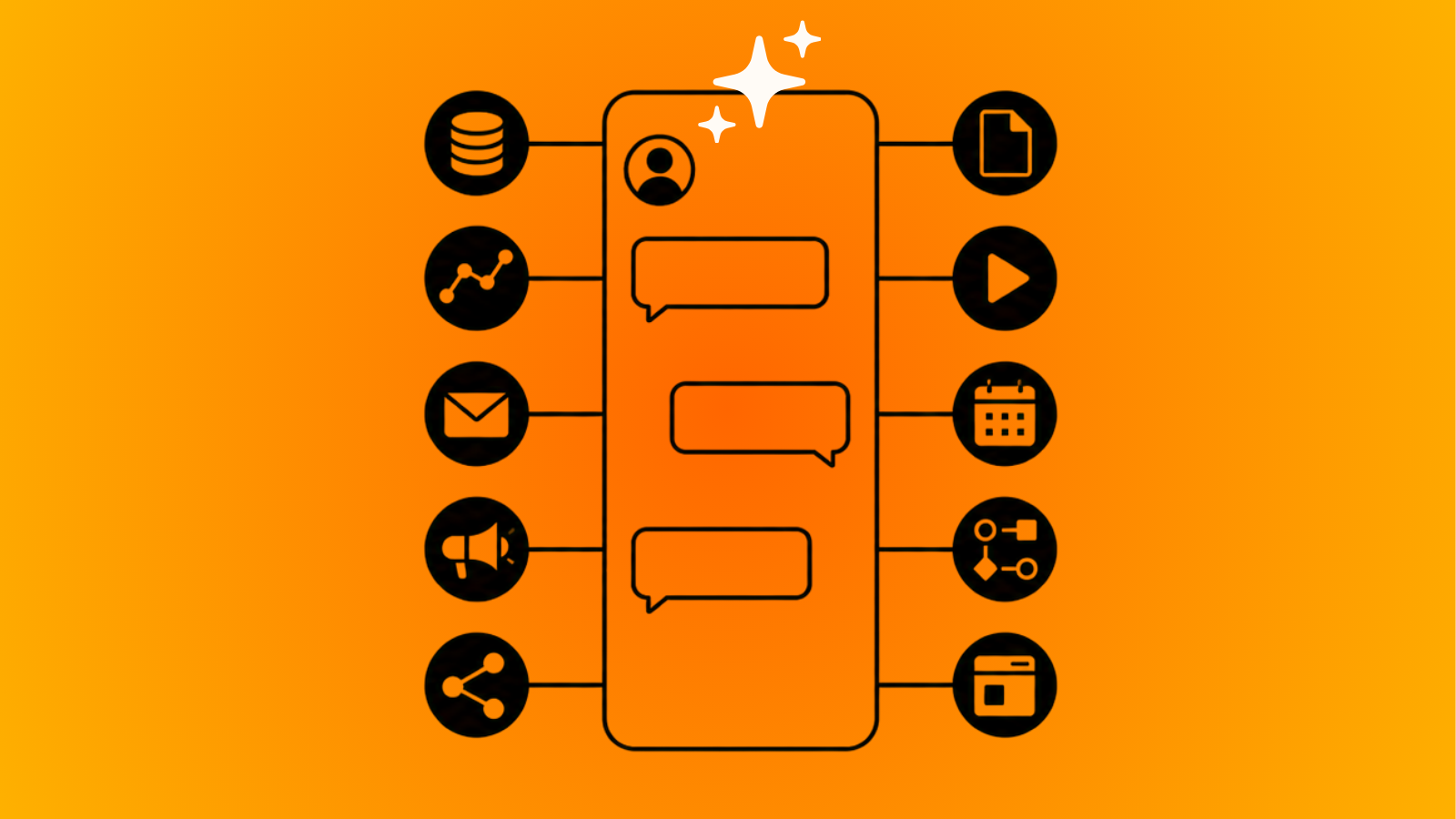
Model Context Protocol is emerging as the connection layer that allows AI assistants and agents to access marketing platforms, understand their data and, increasingly, execute work inside them.
For CMOs, MCP is not another technical acronym to delegate and forget. It could change how marketing teams interact with their technology, how software vendors differentiate themselves and how leaders govern access to customer data, content, campaigns and budgets.
The immediate story is not that the martech interface disappears. It is that the interface is no longer the only place where work begins.
What is Model Context Protocol?
Model Context Protocol, commonly called MCP, is an open standard that gives AI applications a consistent way to connect with external data, tools and workflows. Inside the industry, it is often described as a USB-C port for AI: one standard connector that lets any compatible device plug into any compatible port, rather than a different cable for every combination. Anthropic, which created and open sourced the protocol on Nov. 25, 2024, describes the problem it solves as an "N by M" integration mess, engineering shorthand for what happens when every AI tool needs its own custom connection to every business platform. 10 AI applications, such as Claude, ChatGPT and Copilot, connecting individually to 10 marketing platforms, such as a CRM, an analytics tool and an ad platform, could require up to 100 separate, custom built integrations, each with its own code to write and maintain. MCP replaces that patchwork with a single standard. Each AI application connects to MCP once. Each platform exposes its capabilities through MCP once. From there, any connected AI application can reach any connected platform without a new custom build. A marketer working in ChatGPT or Claude can use one approved MCP connection to retrieve campaign data, analyze performance or ask a marketing platform to complete a task.
MCP does not replace the marketing platform, and it does not make the AI model inherently smarter. It gives the model governed access to current information and defined capabilities inside another system. Without that connection, an AI assistant can discuss campaign strategy in general terms. With the right MCP server, it can inspect the organization's actual campaign data, identify an issue and perform an approved action.
Adoption since the November 2024 launch has been fast by software infrastructure standards. Anthropic reported that MCP SDK downloads grew from roughly 100,000 a month at launch to more than 8 million a month by April 2025 and about 97 million a month by March 2026. OpenAI added MCP support across its Agents SDK, Responses API and ChatGPT desktop app in March 2025. Google DeepMind and Microsoft followed within the year. In December 2025, Anthropic contributed MCP to the Linux Foundation's Agentic AI Foundation, alongside projects from Block and OpenAI, with platinum members including AWS, Google, Microsoft and Salesforce. That broad, cross vendor participation is one reason marketing leaders should view MCP as emerging infrastructure rather than a feature tied to one AI vendor.
The architecture has three main participants.
(a) The host is the AI environment where a person works.
(b) The client manages the connection.
(c) The server exposes selected capabilities from a platform such as a CRM, analytics system, video platform or content management system.
An MCP server can provide resources, which are data the AI can access; tools, which are actions it can perform; and prompts, which are reusable instructions.
For a CMO, the important point is simpler: MCP can let the team work across multiple marketing systems through a common conversational layer.
MCP Capabilities in Martech: From Access to Action
The MCP standard defines technical building blocks, but marketing leaders need a practical way to classify what a connection can do. One useful model has three levels: access, recommendation and action. This is not a formal classification from the MCP specification. It is a leadership framework for evaluating business value and risk.
Access capabilities allow an AI assistant to retrieve information. A marketer might ask which accounts are showing buying intent, which videos generated the strongest engagement or how campaign performance changed this month. These connections reduce the time spent finding reports and reconciling data.
Recommendation capabilities interpret the information and propose a next step. An assistant might identify underperforming creative, explain likely drivers and suggest a new test. This is more valuable than retrieval, but it still leaves the decision and execution with a person.
Action capabilities allow an agent to change something in the connected platform. It might update metadata, reorganize assets, generate creative variations, send work for approval or activate an approved campaign. As a connection moves from access to action, its potential value rises. So does the need for stronger permissions, approval rules, logging and accountability.
So in summary:
Access: retrieval and reporting, lowest risk, fastest to approve
Recommendation: analysis and suggested next steps, human still decides
Action: the agent changes something in the platform, highest value and highest governance requirement
Why MCP Matters for Marketing Leaders, Not Just IT
Martech has long created a paradox. Every new platform promises greater capability, but every platform also adds another interface, data model, workflow and training requirement. Integration usually requires custom development or vendor specific connectors. MCP introduces a common method for AI applications to interact with many of those systems.
This matters because the center of work may shift. Marketers have traditionally opened a platform, navigated its menus, assembled filters and interpreted a dashboard. With MCP, a marketer can begin with a business question and let the AI application determine which authorized systems and functions are needed. The user's intent becomes the starting point, while the software interface becomes one possible destination.
Orchestrating work in natural language is easier than orchestrating it across separate software interfaces, and that shows up in concrete ways for a marketing team.
Ad hoc questions get answered without waiting on an analyst. A cross platform question that no existing dashboard covers can be answered on the spot instead of becoming a report request.
The manual work of exporting data from one platform and importing it into another, long absorbed by marketing operations, moves into the AI layer instead of a person.
Campaign iteration speeds up. A sequence such as identifying an underperforming ad, generating variations, routing them for approval and activating the winner can happen in one conversational thread instead of a multi day, multi tool process.
Sophisticated platforms become usable by more of the team, not just the specialist who knows every menu, which spreads insight generation beyond a handful of power users.
This also changes what the martech operations role looks like. Less time goes into platform specific configuration and training. More goes into designing permissions, approval thresholds and audit trails so orchestration stays governed as it scales, a shift covered in more detail below.
The pace of development makes this more than a theoretical shift. The State of Martech 2026 report, released by Scott Brinker and Frans Riemersma, identified more than 29,000 MCP servers across registries within about 18 months. By comparison, the commercial martech landscape reached 15,505 products after roughly 15 years of tracking, up just 0.79% from 2025. The same report found 91% of marketing organizations already running AI in production, with teams using an average of nearly seven distinct agent types. Server counts vary by registry and do not indicate enterprise readiness, but the contrast shows how rapidly vendors and developers are making software capabilities available to AI.
The result could reduce the operational cost of fragmented martech, but it will not automatically fix a poorly designed stack. An agent connected to inconsistent data, redundant platforms and unclear processes can accelerate confusion. Organizations still need a coherent marketing AI strategy, disciplined data practices and thoughtful AI martech selection. MCP can improve connectivity. It cannot decide which work deserves to be automated or whether the underlying process makes sense.
2026 MCP Martech Launches
Martech's 2026 MCP launches show a market moving from data access toward workflow execution, with vendors approaching that shift at very different levels of ambition. Here are some of the key ones.
HubSpot reached general availability with its MCP server in April 2026, the first major CRM to do so, giving AI assistants read and write access to CRM records inside each user's existing permissions.
Adobe's GenStudio for Performance Marketing MCP server, in early access, connects insight, creative production, approval and activation in one workflow: an assistant can flag an underperforming ad, generate on brand variations and activate the winner once approved.
6sense launched its MCP server in open beta as read only, a more cautious posture that limits the assistant to intelligence and analysis rather than action.
Salesforce, Adobe Marketo Engage, Salesloft, Sprinklr and Wistia shipped comparable servers of their own in the same window. The competitive question for martech vendors is moving beyond whether they have AI. It is becoming whether their data and capabilities can participate safely in the AI environment where customers increasingly choose to work.
Model Context Protocol is emerging as the connection layer that allows AI assistants and agents to access marketing platforms, understand their data and, increasingly, execute work inside them.
For CMOs, MCP is not another technical acronym to delegate and forget. It could change how marketing teams interact with their technology, how software vendors differentiate themselves and how leaders govern access to customer data, content, campaigns and budgets. The immediate story is not that the martech interface disappears. It is that the interface is no longer the only place where work begins.
How MCP Is Changing the Martech Interface
MCP is unlikely to eliminate the martech interface, but it will likely change its job. Navigation, filtering and routine configuration can move into a conversational layer, while the native interface becomes more focused on visualization, comparison, exception handling and approvals. That matters because dashboards only answer questions the product team anticipated, while a conversational connection can respond to less structured questions grounded in the organization's own data. Still, the strongest interfaces won't just hide everything behind a chat box: marketing decisions often need visual pattern recognition and side-by-side comparison, so a marketer may want a conversation to surface the issue, then a visual workspace to examine creative, audience and spend before approving a change.
The more consequential shift is what the interface is for. Today, marketers open a platform and do the work there directly. As AI agents take on more of that execution, the interface's job may shift from doing the work to overseeing it, similar to an air traffic control tower that doesn't fly any plane but tracks every one in the sky and clears each for takeoff. In the same way, the interface could become the place that shows what an agent accessed, what it's proposing, who approved it and what changed. That changes how vendors compete, too: a platform's value may depend less on how many people navigate its menus and more on whether authorized agents can use its data and workflows safely.
MCP Risks CMOs Need to Manage
MCP expands the useful reach of AI, but it also expands the consequences of weak governance. A conversational request can feel simple even when it triggers several tools, data sources and actions behind the scenes, so leaders should evaluate the complete chain, not just the quality of the final response. Permissions should reflect the user's role and task, with read access, recommendation rights and execution rights treated differently, and high impact actions involving spend, publishing, deletion or customer data should require explicit approval. The security stakes are real: a scan of the top 1,000 public MCP servers by Enkrypt AI found roughly a third carried critical vulnerabilities, and Gartner projects that cybersecurity incidents tied to prompt injection, data access or agent misconfiguration will affect more than 40% of enterprise MCP deployments by 2027. The OWASP MCP Security Cheat Sheet recommends controls such as trusted server verification, least privilege access, human confirmation for sensitive operations and audit logging, and these are operational requirements marketing cannot leave entirely to another function.
Not every MCP server carries the same risk. Some grant raw access to a platform's underlying data with no visibility into what the AI can see or touch, while the safer pattern is a connection built specifically for governed AI access: predefined data, read only by default, every query logged. An executive review can start with three questions: What can the connection see? What can it change? Can the organization reconstruct exactly what happened? Community built servers deserve extra scrutiny, since one audit of nearly 1,850 public MCP servers found more than half effectively abandoned, and a strong marketing AI governance model should cover approved servers, authorized users, permitted actions, review thresholds and incident response.
MCP and the Martech Market: New Rules for Vendor Lock-In
MCP changes vendor stickiness rather than eliminating it. Familiarity with a platform's interface matters less once marketers can reach several tools through one AI environment, but two things now matter more: the effort of approving and governing a vendor's MCP server in the first place, and how deeply a team's workflows get built around it. Vendors that ship an official, well-governed server early are likely to come out stickier, not more commoditized. This doesn't make products interchangeable. Vendors still differ in their data, models and expertise, and MCP standardizes the connection, not the value behind it.
The leadership opportunity is not to remove people from marketing but to remove unnecessary navigation and coordination, freeing time for judgment, creative direction and strategy. MCP will be valuable when it makes the martech stack more usable and connected, and dangerous when speed is mistaken for readiness.
What CMOs Should Do Now: A 90-Day MCP Action Plan
CMOs should begin building the decision framework that will prevent scattered experiments from becoming another layer of unmanaged technology.
Assess where you stand: Identify workflows with heavy manual reporting, repeated navigation or cross-platform coordination, and confirm whether any team members have already connected AI assistants to marketing platforms without formal approval. This surfaces both the clearest opportunities and any existing blind spots.
Start with a single, contained pilot: Choose one use case and begin with information access only, not the ability to take action. Use an official server maintained by the vendor rather than an unverified, community-built one, and select a workflow with clear boundaries, such as reporting or account research.
Bring IT and security in before you pilot, not after: Governance works best when it is designed alongside the first use case, not bolted on once something is already running. Agree jointly on what a connection can see, what it can change and how actions can be traced after the fact, with any action involving budget, deletion, customer data or publishing requiring explicit human approval.
Measure results, not adoption: Track time saved, error rates and output quality. A workflow that runs faster but creates more review work afterward is not a success.
Make vendor evaluation and cross-functional ownership standard practice: Ask vendors directly whether they support the AI assistants your team uses, whether their MCP server is official or community-built, and whether actions are logged. Marketing, IT, security and legal should own this jointly on an ongoing basis, not revisit it as a one-off decision each time a new tool comes up.
Prepare Your Martech Stack for Agentic Work
Spark Novus helps marketing leaders evaluate AI opportunities, select the right technology and establish governance before scaling. Contact us to discuss where MCP-enabled workflows could create meaningful value in your marketing organization.
-
MCP stands for Model Context Protocol, an open standard created by Anthropic that lets AI applications connect with external systems, data and tools through one consistent method. It replaces the custom, one off integrations that marketing teams previously needed for each AI tool and platform pairing.
-
No. An AI agent can use MCP to reach approved systems, but MCP is the connection protocol rather than the agent itself. The agent decides what to do; MCP determines how it safely reaches the data and tools it needs to do it.
-
MCP is more likely to complement APIs than replace them. Many MCP servers are built on top of existing APIs while presenting their data and functions in a standardized format that AI applications can understand and invoke without custom development.
-
Marketing leaders can evaluate MCP capabilities in three practical categories: information access, analysis and recommendation, and action or execution. Each level carries more potential value than the last, and each requires stronger permissions and oversight.
-
No. Conversational interfaces may handle more navigation and routine work, while native interfaces remain important for visualization, review, approvals, configuration and auditability. The interface’s job shifts from data entry point to control plane.
-
The greatest risk is giving an AI system more data access or execution authority than the use case requires, especially when customer information, publishing or campaign spend is involved. Gartner projects that more than 40% of enterprise MCP deployments will face a related security incident by 2027.
-
Start with one high friction, contained workflow, define the minimum permissions needed, require approval for consequential actions and measure both efficiency and output quality. Choose an official, vendor maintained MCP server rather than an unverified community built one.
-
Ask three questions before approving any connection: what the server can see, what it can change and whether the organization can reconstruct exactly what it did. A governed server that is read only by default, role scoped and fully logged is safer than one offering broad, unrestricted access.
Sources
Model Context Protocol — Official documentation: https://modelcontextprotocol.io/docs/getting-started/intro
Linux Foundation — Agentic AI Foundation announcement: https://www.linuxfoundation.org/press/linux-foundation-announces-the-formation-of-the-agentic-ai-foundation
Chief Martec — State of Martech 2026 report: https://newsletter.chiefmartec.com/p/here-s-your-ungated-copy-of-the-state-of-martech-2026-report
HubSpot — MCP server for AI tools: https://developers.hubspot.com/ai-tools/mcp
Adobe — GenStudio for Performance Marketing MCP server announcement: https://business.adobe.com/blog/introducing-genstudio-performance-marketing-mcp-server
6sense — MCP server launch announcement: https://6sense.com/newsroom/6sense-launches-mcp-server-bringing-proprietary-gtm-intelligence-into-any-ai-agent/
Sprinklr — AI capabilities announcement: https://www.sprinklr.com/newsroom/sprinklr-introduces-new-ai-capabilities-to-help-brands-move-from-insights-to-real-time-customer-action/
Wistia — MCP server announcement: https://wistia.com/blog/wistia-mcp-server
OWASP — MCP Security Cheat Sheet: https://cheatsheetseries.owasp.org/cheatsheets/MCP_Security_Cheat_Sheet.html